Fair Play in the Digital Fairness ActRegister

Co-organised by Stop Killing Games and Internet Archive Europe

Fair Play in the Digital Fairness Act

Two panels on digital ownership and age verification, and what the Digital Fairness Act should do about them.

Saturday 17 October 202615:30 to 18:30Steigenberger Icon Wiltcher's, Avenue Louise 71, Brussels
Register

Why now

On 16 June 2026, the European Commission replied to the Stop Destroying Videogames European Citizens' Initiative, signed by roughly 1.5 million people. It declined to legislate, citing intellectual property, business confidentiality, cost and security, and committed instead to a voluntary industry code of conduct on game end-of-life by the end of 2026.

The campaign has moved to the Digital Fairness Act (DFA), expected as a Commission proposal in Q4 2026, with 45 Members of the European Parliament already backing a call for legislative action. On the same day, Stop Killing the Internet launched to challenge the spread of age verification, ID checks and chat control.

This session brings campaigners, researchers, consumer advocates and archivists together to ask what fair rules for the digital world should actually say.

Programme

  1. 15:30Doors open, coffee
  2. 15:45Panel 1: Ownership 2.0: you bought it, who owns it?
  3. Short break
  4. Panel 2: Papers, please: the internet after age verification
  5. 18:30Close, followed by a standing dinner and the Stop Killing Games Gala

Panel 1

Ownership 2.0: you bought it, who owns it?

If a game you paid for can be switched off remotely, did you ever own it? The panel asks whether existing consumer law protects buyers, and what a Digital Fairness Act amendment on ownership and preservation would actually say.

Questions on the table

  • The Commission says existing consumer law already protects buyers. Does it, and where does it visibly fail?
  • Is "buy" a misleading commercial practice when the product can be remotely disabled?
  • What does digital exhaustion mean in 2026: should a right to resell, lend or preserve follow the purchase?
  • Who preserves digital culture when commercial life ends: publishers, libraries, archives, communities?
  • Voluntary code of conduct or binding rules: what does the games precedent teach other sectors?

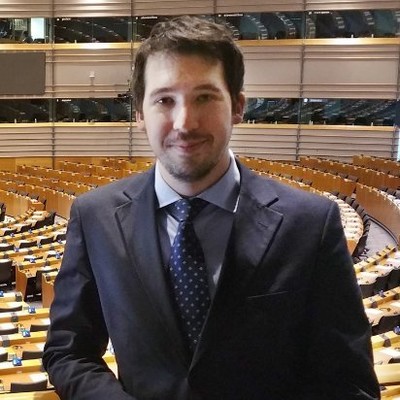
Moritz M. Katzner

Stop Killing Games

Moritz M. Katzner is Director General of SKG Global and a political advisor and legislative strategist. As part of the European Citizens' Initiative "Stop Destroying Videogames", he coordinates the public representation of the roughly 1.5 million citizens who signed it, working with the European Parliament, the Commission and the Council to anchor consumer policy positions against problematic digital business models. He also leads the development of SKG Global's policy platform, and is a founder of Stop Killing the Internet.


Read bio

Moritz M. Katzner is Director General of SKG Global and a political advisor and legislative strategist. As part of the European Citizens' Initiative "Stop Destroying Videogames", he coordinates the public representation of the roughly 1.5 million citizens who signed it, working with the European Parliament, the Commission and the Council to anchor consumer policy positions against problematic digital business models. He also leads the development of SKG Global's policy platform, and is a founder of Stop Killing the Internet.
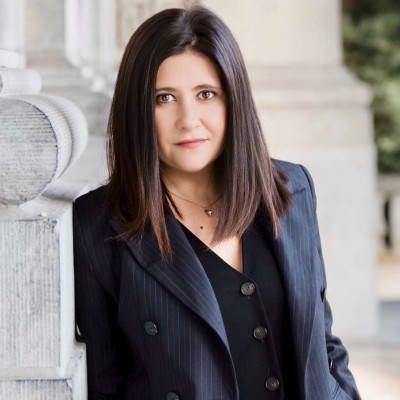
Julien Masanès

Internet Archive Europe

Julien Masanès is co-founder of Internet Archive Europe, which he helped establish in 2004, and AI lead and chairman at Hanzo. He was previously CEO of the Internet Memory Foundation and Internet Memory Research, building web scale archives of the internet, and before that led the web archiving programme at the Bibliothèque nationale de France. He holds an MBA from HEC Paris and master's degrees in cognitive science and epistemology.

Read bio

Julien Masanès is co-founder of Internet Archive Europe, which he helped establish in 2004, and AI lead and chairman at Hanzo. He was previously CEO of the Internet Memory Foundation and Internet Memory Research, building web scale archives of the internet, and before that led the web archiving programme at the Bibliothèque nationale de France. He holds an MBA from HEC Paris and master's degrees in cognitive science and epistemology.

Kasper Drążewski

Centre for IT and IP Law (CiTiP), KU Leuven

Kasper Drążewski is Senior Researcher and Associate Director of the Academic Programme at the Centre for IT and IP Law (CiTiP) at KU Leuven, where he researches AI, intellectual property and data regulation. He holds a PhD in Law from the European University Institute on the copyright aspects of technological innovation. From 2020 to 2024, he was Senior Legal Officer at BEUC, where he coordinated a project on reinventing consumer law for the digital society.

Read bio

Kasper Drążewski is Senior Researcher and Associate Director of the Academic Programme at the Centre for IT and IP Law (CiTiP) at KU Leuven, where he researches AI, intellectual property and data regulation. He holds a PhD in Law from the European University Institute on the copyright aspects of technological innovation. From 2020 to 2024, he was Senior Legal Officer at BEUC, where he coordinated a project on reinventing consumer law for the digital society.

Oana Matei

Euroconsumers

Oana Matei is Policy and Legal Officer for digital policy at Euroconsumers. She has worked across the European Parliament, an EU affairs consultancy and a trade association, most recently as policy adviser to a Member of the European Parliament (MEP) on the Internal Market Committee, and previously for ten years as senior policy adviser to an MEP and Vice President of the S&D Group. She is a PhD researcher at SNSPA Bucharest on the EU governance of emerging digital technologies.

Read bio

Oana Matei is Policy and Legal Officer for digital policy at Euroconsumers. She has worked across the European Parliament, an EU affairs consultancy and a trade association, most recently as policy adviser to a Member of the European Parliament (MEP) on the Internal Market Committee, and previously for ten years as senior policy adviser to an MEP and Vice President of the S&D Group. She is a PhD researcher at SNSPA Bucharest on the EU governance of emerging digital technologies.

Panel 2

Papers, please: the internet after age verification

Age checks, ID checks and chat control sit on one escalation ladder. The panel looks at what age assurance technology can and cannot do, what the Discord breach revealed about handing government ID to third parties, and what rights-respecting child protection would look like.

Questions on the table

  • Age assurance technology in 2026: what actually works, at what error rate, and at what privacy cost?
  • Is there a technical difference between age verification and identity verification at scale, or only a rhetorical one?
  • The Discord breach: what does it tell us about mandating third party ID collection?
  • What does a generation lose when access to information and community requires ID?
  • What would rights-respecting child protection look like: design duties, algorithm controls, enforcement against actual predators?

Paul Diegel

Stop Killing the Internet

Paul Diegel is an organiser of Stop Killing the Internet and Senior Policy Adviser on the Cybersecurity Act II in the European Parliament, working for MEP Markéta Gregorová. He has spent twelve years in the Parliament, previously as head of office and dual use export control adviser to MEP Klaus Buchner, and holds an MSc in Politics and Government in the European Union from the London School of Economics.

Read bio

Paul Diegel is an organiser of Stop Killing the Internet and Senior Policy Adviser on the Cybersecurity Act II in the European Parliament, working for MEP Markéta Gregorová. He has spent twelve years in the Parliament, previously as head of office and dual use export control adviser to MEP Klaus Buchner, and holds an MSc in Politics and Government in the European Union from the London School of Economics.

James Baker

Open Rights Group and Gamers' Voice

James Baker is Platform Power and Free Expression Manager at Open Rights Group, where he works on freedom of expression, privacy, surveillance and online regulation, and has given evidence to the UK Parliament on the organisation's behalf. He founded Stop Killing the Internet, now a coalition of more than 25 organisations across Europe, India, Africa and Australia, and co-founded Gamers' Voice, the UK consumer advocacy group. His campaigning began with NO2ID, opposing the UK's national identity card scheme.

Read bio

James Baker is Platform Power and Free Expression Manager at Open Rights Group, where he works on freedom of expression, privacy, surveillance and online regulation, and has given evidence to the UK Parliament on the organisation's behalf. He founded Stop Killing the Internet, now a coalition of more than 25 organisations across Europe, India, Africa and Australia, and co-founded Gamers' Voice, the UK consumer advocacy group. His campaigning began with NO2ID, opposing the UK's national identity card scheme.

Prof. Bart Preneel

KU Leuven, COSIC

Bart Preneel is Full Professor at KU Leuven and head of the COSIC research group, working on cryptology, cybersecurity and privacy. He has authored more than 400 scientific publications, testified before the European Parliament on several occasions, and is a former President of the International Association for Cryptologic Research, a member of the ENISA Permanent Stakeholders Group, and a member of Academia Europaea. He received the RSA Award for Excellence in the Field of Mathematics in 2014 and the Kristian Beckman Award in 2016.

Read bio

Bart Preneel is Full Professor at KU Leuven and head of the COSIC research group, working on cryptology, cybersecurity and privacy. He has authored more than 400 scientific publications, testified before the European Parliament on several occasions, and is a former President of the International Association for Cryptologic Research, a member of the ENISA Permanent Stakeholders Group, and a member of Academia Europaea. He received the RSA Award for Excellence in the Field of Mathematics in 2014 and the Kristian Beckman Award in 2016.

Moderator

Caroline De Cock

Head of Research, information labs

Caroline De Cock moderates both panels. She is Head of Research at information labs and a Senior Fellow at the Lisbon Council, and has worked on EU digital policy for more than 20 years, covering copyright, platform regulation, AI governance and knowledge infrastructure. She is the author of AI Tools, Not Gods (2026).

Read bio

Caroline De Cock moderates both panels. She is Head of Research at information labs and a Senior Fellow at the Lisbon Council, and has worked on EU digital policy for more than 20 years, covering copyright, platform regulation, AI governance and knowledge infrastructure. She is the author of AI Tools, Not Gods (2026).

Practical information

Date: Saturday 17 October 2026

Time: 15:30 to 18:30 (doors and coffee from 15:30, discussions from 15:45)

Venue: Steigenberger Icon Wiltcher's, Avenue Louise 71, 1050 Brussels

Language: English

Admission: Free, registration required

Register